
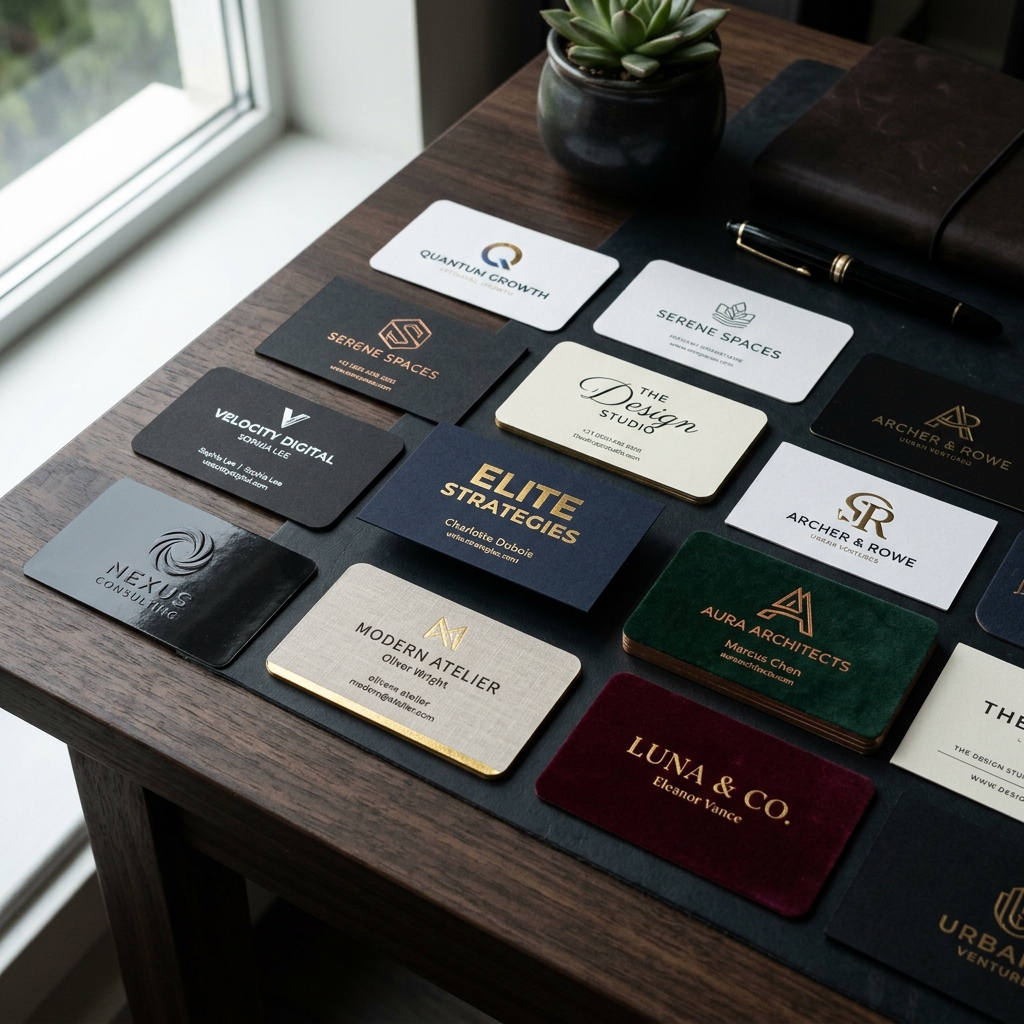
If you've ever handed someone your visiting card and watched them glance at it for half a second before slipping it into their wallet without a second thought, you know the problem. A forgettable card is worse than no card at all — it tells people you didn't think your own brand was worth the effort. And in a city like Delhi, where every trader, consultant, and startup founder is handing out cards at the same trade fair or the same client meeting, the card that gets remembered is the one that looks and feels different.
I've watched this play out at enough exhibitions in Pragati Maidan and business meetups across CP and Nehru Place to notice a pattern: the cards people actually keep are rarely the loudest ones. They're the ones with a finish that feels different in the hand, a weight that doesn't bend when it goes into a wallet, and a design that doesn't try to cram every piece of contact information onto a 8.9 cm strip of paper.
That's really what this guide is about — not just where to print a visiting card, but how to actually pick one that does its job.
Why the Visiting Card Still Matters in 2026
It would be easy to assume that with WhatsApp business profiles, LinkedIn, and QR codes everywhere, the physical visiting card has become irrelevant. In practice, the opposite has happened. Because everyone exchanges digital contacts so easily now, a well-made physical card actually stands out more than it used to — it signals that you took a deliberate, offline step to make an impression.
Real estate brokers in Delhi NCR still swear by it. So do doctors, CAs, boutique owners, and manufacturers who deal in bulk B2B orders where a phone number saved in a stranger's contacts list gets lost in a scroll, but a card sitting on a desk gets picked up again the next time someone needs that service. A wedding planner I know in Lajpat Nagar told me that half her repeat clients came from a card that sat on someone's fridge for eight months before a relative needed the same service.
The trick is that not all visiting cards are created equal, and most people searching for a visiting card printing service in Delhi don't actually know what separates a card that looks premium from one that looks like it came out of a cheap local press in bulk without any quality check.
What Actually Makes a Visiting Card "Premium"
There's a lot of marketing noise around the word premium, so let's break down what it concretely means when you're placing an order, rather than just taking a printer's word for it.
Paper weight (GSM). Anything below 250 GSM tends to feel flimsy and bends easily inside a wallet within weeks. Good visiting cards sit in the 300-400 GSM range. Heavier isn't automatically better either — 400 GSM cards feel rigid and substantial, which works well for law firms, consultants, and corporate roles, while 300 GSM is often enough for retail and hospitality where cards get handed out in higher volume and cost per card matters more.
Finish. This is where most of the visual difference comes from, and it's also where most first-time buyers get confused because every printer describes their finishes slightly differently:
- • Gloss finish makes colours pop and photographs look sharp — ideal if your card has a logo with strong colours or imagery. The downside is that fingerprints show up more easily on a glossy surface.
- • Matte finish gives a soft, understated look that photographs and fingerprints don't smudge as easily — popular with law firms, doctors, and consultants who want a more serious tone rather than a flashy one.
- • Spot UV adds a raised, glossy highlight over specific parts of the design (like a logo) while the rest of the card stays matte. This is usually what makes a card feel genuinely expensive without shouting about it, and it's become the go-to choice for boutique brands and design studios in the last couple of years.
- • Foil stamping (gold, silver, rose gold) is the finish most people associate with luxury brands, jewellers, and wedding planners. It catches light differently depending on how the card is tilted, which is exactly why it photographs so well on Instagram unboxing reels.
- • Textured and velvet finishes give a tactile, almost fabric-like feel that's hard to forget — the kind of card people run their thumb over before they even read what's printed on it.
- • 3D UV printing raises specific parts of the design off the card surface entirely, giving a slightly embossed, almost sculpted look. It costs more per unit but tends to work extremely well for brands that want their logo to physically stand out.
Cut and shape. Standard rectangular cards are the safe, professional choice, but die-cut, circular, and rounded-corner cards are increasingly common for design studios, salons, and creative agencies that want their card to look different from the stack the moment it's pulled out of a wallet.
Print precision. This one is invisible until it isn't — colour accuracy (Pantone matching), sharp small-text printing, and clean edges without ink bleed are what separate a card printed on a properly calibrated offset press from one run off a cheap digital printer in bulk. If you've ever received a card where the logo colour looked slightly off from the company's actual brand colour, that's a colour-calibration problem, not a design problem.
Why "Express Delivery" Actually Matters More Than People Think
Here's something most visiting card guides don't mention: timing is often the actual deciding factor, not design. Somebody attending a networking event tomorrow morning, or a business that just onboarded a new employee and needs their card by end of week, doesn't have the luxury of waiting seven to ten days for a shipment to arrive.
This is where ordering from a Delhi NCR-based manufacturer with same-day dispatch makes a real difference over ordering from a large national platform that ships from a centralised warehouse in a different state. If you're based in Delhi, Noida, Gurgaon, or Ghaziabad, choosing a local printing press means your order can realistically go from design upload to your doorstep within a day or two, instead of waiting a week for a truck to arrive from another city.
There's also a quieter advantage here that people rarely think about: if something in your design needs a last-minute correction — a wrong pin code, a phone number typo caught after upload — a local manufacturer can usually fix it and reprint the same day. A platform routing your order through a call centre and a warehouse in a different state cannot move that fast, no matter how good their website looks. For anyone Googling "express delivery premium visiting card," this local-manufacturer advantage is really the whole answer.
Ordering Visiting Cards Online: What to Actually Check Before You Pay
A lot of people get burned on their first bulk visiting card order because they don't ask the right questions upfront, and only find out what went wrong once 500 cards have already arrived. Before you finalise an order:
-
1
Ask about MOQ (minimum order quantity). Most presses print in batches of 100. If you only need 25 cards for a personal use case, check if the press supports smaller runs — some don't, and you'll end up paying for far more cards than you actually need.
-
2
Confirm the bleed and safe zone. A standard visiting card size is 8.9 cm x 5.1 cm, and your background design needs to extend slightly beyond that edge to avoid a thin white border after cutting. If a printing service doesn't mention this to you before you upload your design, they're probably not going to catch your mistake before it goes to press — and you'll only find out after the cards arrive with a crooked white edge running along one side.
-
3
Ask if proofing is included. A quick design check before the card goes to press catches typos, wrong phone numbers, and colour mismatches. This one step alone prevents most reprint headaches, and it costs the printer almost nothing to offer — if they don't offer it, that tells you something about how they handle quality control generally.
-
4
Compare per-unit pricing at your actual quantity, not the lowest advertised rate on the homepage. A lot of printing websites advertise a headline price that only applies at very high volumes (500 or 1000+ units), and the real per-card cost at a 100-unit order is noticeably higher than what the banner promised.
-
5
Check if same-day or next-day delivery is genuinely available in your pin code, not just advertised broadly. Delhi NCR coverage varies a lot between printing companies depending on where their actual production unit sits — a press in Sadar Bazar might dispatch same-day within old Delhi but take two extra days to reach Gurgaon.
-
6
Ask what happens if you're unhappy with the print quality. A reprint policy or quality guarantee tells you whether the company stands behind its own work, or whether you're on your own once the order ships.
Choosing a Finish Based on Your Profession
If you're not sure where to start, here's a rough, practical guide based on what tends to work for different fields in Delhi's market, drawn from what actually gets reordered versus what sits unused in a drawer:
- • Real estate and sales professionals — gloss or foil finish tends to photograph well and feels premium in high-touch client meetings where a card is often the last thing exchanged before a deal is discussed.
- • Doctors, lawyers, consultants — matte or textured finish, understated colours, no unnecessary embellishment. Clients in these fields generally read a flashy card as a red flag rather than a plus point.
- • Retail, e-commerce sellers, boutique owners — die-cut shapes or coloured-edge cards that double as a small piece of packaging branding, often matched with the same colour palette as their product boxes or stickers.
- • Startups and design studios — unconventional shapes, spot UV, or minimalist black-and-white designs with a single accent colour. This crowd tends to value restraint over decoration.
- • Jewellers and wedding planners — foil stamping, velvet finish, and heavier card stock, since these cards are often handed over alongside a physical product or sample.
- • Manufacturers and B2B suppliers — sturdy 350-400 GSM stock with clear, no-nonsense typography. Buyers in this segment care more about legibility of the GST number and contact details than aesthetics.
A Quick Word on Why "Manufacturer Direct" Pricing Matters
One thing that trips up first-time buyers is not realising how many layers exist between them and the actual printing press. A lot of online platforms are essentially marketplaces — they take your order, forward it to a third-party press, add their own margin on top, and then ship it to you. That's not necessarily a bad model, but it does mean longer turnaround times and less control if something needs to be corrected quickly.
Ordering directly from a manufacturer that owns its own offset and digital printing setup in Delhi NCR cuts out that middle layer entirely. You get wholesale pricing because there's no marketplace margin stacked on top of the base cost, and if a design correction is needed, it's a same-day phone call to the press rather than a support ticket routed through three different systems before someone actually looks at your file.
A Realistic Cost Breakdown
Pricing on visiting cards varies more than people expect, and a lot of that variation comes down to finish and paper weight rather than just brand markup. As a rough guide for 100-unit orders in the Delhi market:
- • Standard/normal cards on basic stock typically sit at the lowest end of the pricing range — a sensible choice for internal staff cards or high-volume distribution where design flourish matters less.
- • Gloss or matte finish cards sit slightly above that, since the lamination process adds a production step.
- • Textured, synthetic, or kraft finish cards cost more due to the specialty stock involved.
- • Foil stamping, 3D UV, and emboss finishes sit at the premium end, since these require separate dies and additional press passes.
The gap between the cheapest and most premium option is usually smaller than people assume — often just a few rupees per card — which is why it rarely makes sense to default to the cheapest option just to save a small amount, especially for a card that's meant to represent your business for the next year or two.
Frequently Asked Questions
How long does visiting card printing actually take in Delhi?
For standard orders, most Delhi-based presses can turn around a batch within 2-3 working days. If same-day dispatch is available and you're within the express delivery zone, you can realistically have cards printed and shipped on the same day you finalise your design.
What's the minimum order quantity for visiting cards?
Most printing presses set their MOQ at 100 units, since that's the batch size that makes offset and digital printing runs cost-efficient. Some presses do offer smaller custom runs at a higher per-unit price.
Which finish lasts the longest without looking worn?
Matte and textured finishes tend to hide fingerprints, scuffs, and minor wear better than high-gloss finishes, which show scratches more visibly over time.
Can I reorder the exact same design later without resubmitting my files?
Most printers that let you create an account and save your design will let you reorder directly from your saved order history, which is worth checking before you place your first order if you expect to reorder regularly.
Is it cheaper to order visiting cards online or from a local shop?
Ordering online from a manufacturer directly is usually cheaper than a local retail print shop, since local shops typically outsource the actual printing to a press and add their own margin on top.
Final Thoughts
A visiting card is a small object doing a disproportionately large job — it's often the only physical thing a potential client, vendor, or collaborator walks away with after meeting you. Getting the paper weight, finish, and print quality right costs very little extra, but it changes whether that card gets kept on a desk or thrown out with yesterday's newspaper.
If you're in Delhi NCR and need visiting cards printed with a finish that actually matches your industry, and you need them fast rather than in a week, working with a local manufacturer rather than a national marketplace is usually the more practical choice — both on price and on turnaround.
Explore Visiting Card Finishes & Place Order
Explore 20+ luxury finishes including Spot UV, Velvet Matte, Embossed & Gold Foil with express same-day dispatch across Delhi NCR.